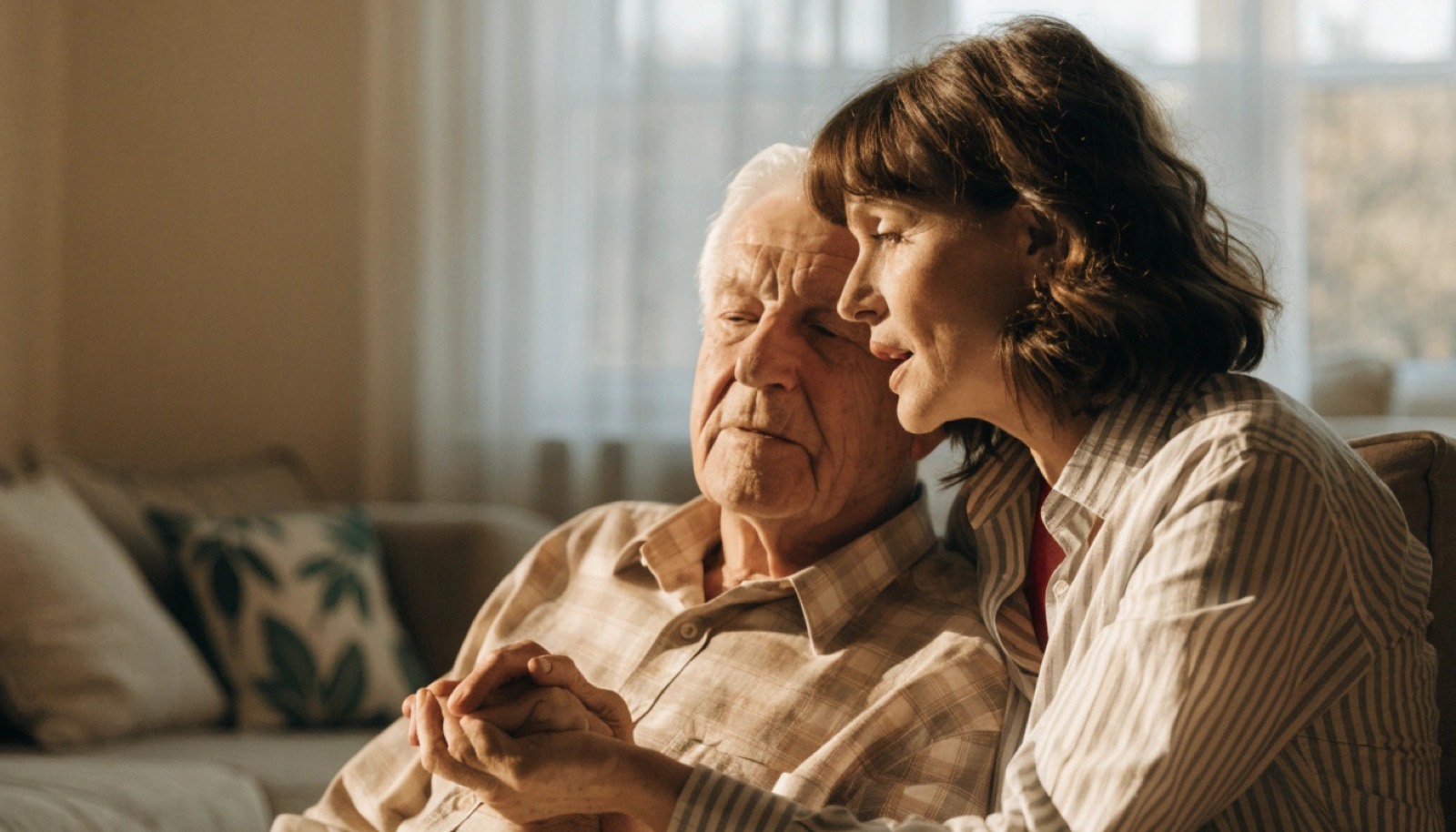
Caring for a Loved One With Alzheimer's: Resources and Research
A practical guide for Alzheimer's caregivers in Volusia and Flagler County: where to find help, what Medicare covers, and how research can support your family.

If you are caring for someone with Alzheimer's, you already know it is more than a medical diagnosis. It changes schedules, finances, family roles, and sleep. It also tends to arrive without a manual.
The good news is that far more help exists than most families realize, much of it free or covered by insurance. The hard part is knowing where to look. This guide gathers the most useful resources for caregivers in Volusia and Flagler County, explains what Medicare now covers, and shows where clinical research fits into the picture.
You Are Not Doing This Alone
According to the Alzheimer's Association 2026 Facts and Figures report, nearly 13 million Americans provided more than 19 billion hours of unpaid care for people living with Alzheimer's or another dementia last year. In Florida, the Association's state figures count about 877,000 unpaid caregivers supporting roughly 579,900 people aged 65 and older with Alzheimer's.
Those numbers are a reminder of two things. Your experience is shared by a huge community of families. And because Florida has so many caregivers, it also has a well-developed network of programs built to support them.
Start With a Clear Diagnosis and Care Plan
Many families begin caregiving before they have a confirmed diagnosis, or with a diagnosis but no plan. Both are common, and both are worth addressing.
Ask about a cognitive assessment and care planning visit. Medicare covers a dedicated visit where a clinician evaluates memory and thinking, reviews medications, checks for safety concerns, and builds a written care plan. Ask your loved one's primary care doctor whether they offer it.
Know that diagnosis is getting easier. Blood tests can now help doctors assess the brain changes linked to Alzheimer's in people who have symptoms. On August 24, 2026, the FDA cleared Roche's Elecsys pTau217 test, which the Alzheimer's Association reports is the fourth FDA-cleared blood-based biomarker test for Alzheimer's and can be used in primary care. A clearer diagnosis helps you plan and opens the door to treatment and support programs.
Rule out other causes. Memory problems can also come from medication side effects, sleep problems, thyroid issues, or vitamin deficiencies, and some of those are treatable.
The families who do best are rarely the ones with the fewest challenges. They are the ones who ask for help early. A care plan, a support group, and a doctor who knows what is happening at home can change the whole experience of this disease.
 Charles Ross, MD, FAAFP, DABOM, DABLM
Chief Medical Officer
Charles Ross, MD, FAAFP, DABOM, DABLM
Chief Medical Officer
Local Resources for Volusia and Flagler County Caregivers
These are the first calls we recommend. Each one can connect you to additional services.
ElderSource and the Elder Helpline
ElderSource is the Aging and Disability Resource Center serving Volusia, Flagler, and five other Northeast Florida counties. Its Elder HelpLine connects older adults and caregivers with caregiver support, support groups, caregiver training such as Powerful Tools for Caregivers, and dementia care programs. Call toll-free at 1-888-242-4464, Monday through Friday, 8 a.m. to 5 p.m.
Florida's Alzheimer's Disease Initiative
The Florida Department of Elder Affairs runs the Alzheimer's Disease Initiative, which funds in-home and facility-based respite care (including emergency respite), caregiver counseling, support groups, and training, plus a statewide network of 17 Memory Disorder Clinics that provide diagnostic evaluations and caregiver education. It also coordinates the State of Florida Brain Bank, which supports Alzheimer's research. Volusia and Flagler residents are served by regional clinics, and ElderSource can help you find the right one and check eligibility for respite services.
Alzheimer's Association 24/7 Helpline
The Alzheimer's Association Helpline at 800-272-3900 is free and staffed around the clock by dementia specialists. It is especially helpful at 2 a.m. when a situation feels urgent but is not an emergency. The Association also hosts caregiver support groups and education programs across Central Florida, many of them virtual.
Eldercare Locator
If you are caring for a parent who lives in another state, the federal Eldercare Locator (1-800-677-1116) finds local aging services anywhere in the country.
What Medicare Now Offers Dementia Caregivers
On July 1, 2024, Medicare launched the GUIDE Model, a program designed specifically for people living with dementia and the people who care for them. Through participating programs, eligible families can receive:
A care navigator who helps coordinate doctors, medications, and services
Caregiver training and education tailored to your situation
A 24/7 support line for help when problems come up
Respite services so caregivers can take a break, up to $2,500 per year for eligible families
To qualify, your loved one generally needs Original Medicare (Parts A and B, not Medicare Advantage), a dementia diagnosis, and to live at home or in a participating care community. ElderSource lists GUIDE dementia care among its services, so the Elder HelpLine is a good place to ask whether a participating program is available to your family.
Planning Ahead: The Conversations Worth Having Early
Some of the most important caregiving steps are easiest while your loved one can still take part in the decisions.
Legal documents. A durable power of attorney and a health care surrogate designation let a trusted person act when your loved one cannot. An elder law attorney can explain Florida's specific requirements.
Finances. Review bank accounts, bills, and insurance together, and set up protections against scams, which often target people with memory loss.
Care wishes. Talk about preferences for living arrangements, medical care, and end-of-life decisions, and write them down.
Safety at home. Consider driving, medication management, stove use, and wandering. Simple changes, like automatic shutoffs and door alarms, can prevent emergencies.
These talks are rarely easy. Starting them early means decisions reflect what your loved one wants, rather than what a crisis forces.
Choosing the Right Kind of Care
As Alzheimer's progresses, most families use more than one kind of help. Knowing the options ahead of time makes each transition less stressful.
In-home care. Home care aides can help with bathing, dressing, meals, and companionship for a few hours a week or around the clock. It lets your loved one stay in familiar surroundings, which often reduces confusion. Ask agencies whether their aides have dementia-specific training.
Adult day programs. These programs offer supervised activities, meals, and social time during the day, giving caregivers who work or need a break regular relief. Many people with Alzheimer's enjoy the routine and connection.
Assisted living with memory care. Memory care communities provide secure environments, staff trained in dementia care, and structured daily activities. When touring, ask about staff-to-resident ratios, how staff respond to agitation, and how families are kept informed.
Skilled nursing and hospice. In later stages, or when medical needs grow, a nursing facility may be the safest choice. Hospice can support families at home or in a facility when the focus shifts to comfort.
There is no single right answer. The best choice depends on your loved one's needs, your own health and schedule, and your budget, and it will likely change over time.
Build Your Care Team
Caregiving works best when responsibilities are shared. Consider who can fill each role:
Primary care doctor: your main medical partner for symptoms, medications, and referrals
Specialist: a neurologist, geriatrician, or Memory Disorder Clinic for diagnosis and complex symptoms
Family and friends: specific, scheduled tasks work better than "let me know if you need anything"
Elder law attorney and financial advisor: for legal documents and long-term care planning
Support group: people who understand what you are going through
Research team: if you choose to explore a study, an added layer of monitoring and support
Write the list down with phone numbers and keep it where anyone helping can find it.
Taking Care of the Caregiver
Caregiver health is part of the care plan, not an afterthought. Watch for signs that you need more support: constant exhaustion, getting sick more often, withdrawing from friends, feeling resentful or hopeless, or neglecting your own doctor visits.
If you see those signs, use the resources above. Respite, adult day programs, and support groups exist precisely so caregivers can keep going. For practical tips on communication and managing the emotional side of caregiving, see our guide How To Deal With Alzheimer's As a Family Member.
Where Research Fits Into Caregiving
Clinical research can feel like something for scientists, not families. In reality, many of the tools caregivers rely on today came from families who took part in studies, including the first treatments designed to slow early Alzheimer's, blood-based diagnostic tests, and the first FDA-approved medications for Alzheimer's-related agitation.
Research also focuses on the symptoms that are hardest at home. Agitation, restlessness, hallucinations, and delusions are among the leading reasons caregivers feel overwhelmed. We explain these in Alzheimer's Agitation: What Families Should Know About New Studies and Understanding Alzheimer's Psychosis: What Caregivers Should Know.
For some families, joining a study adds support rather than burden:
Close attention from a research team that monitors symptoms and safety at every visit
Study-related assessments and care at no cost, often with compensation for time and travel
A caregiver voice that counts. Most Alzheimer's studies include the caregiver as a study partner, because your observations at home matter
Participation is always voluntary. Your loved one keeps their regular doctor, and you can leave a study at any time. To understand the protections in place, read Is a Clinical Trial Safe?, and for the step-by-step process, see How to Qualify for a Paid Clinical Trial.
Alzheimer's Research in Daytona Beach
Arrow Clinical Trials is enrolling several neurology studies for people living with Alzheimer's disease and their care partners, including research focused on:
Hallucinations and delusions in Alzheimer's disease: the ACP-204 study, the ADEPT-4 study, and the KarXT study
We are located at 1717 N Clyde Morris Blvd, Suite 120, in Daytona Beach. Each study page has a short pre-screening form, or call (386) 278-8000. Caregivers are welcome to call first with questions, with no obligation.
Ready to see what is enrolling? View our open studies.
Frequently Asked Questions
Where can I find Alzheimer's caregiver support in Volusia County?
Start with the ElderSource Elder HelpLine at 1-888-242-4464, which serves Volusia and Flagler County and connects caregivers with support groups, training, respite options, and dementia care programs. The Alzheimer's Association Helpline at 800-272-3900 is available 24/7.
Does Medicare pay for Alzheimer's caregiver support?
Medicare covers a cognitive assessment and care planning visit, and the Medicare GUIDE Model offers care navigation, caregiver training, and respite services through participating programs for eligible people with Original Medicare. Availability depends on where you live.
What is respite care, and how do I get it?
Respite care gives caregivers a short break while someone else provides care, at home, in an adult day program, or in a care facility. In Florida, respite may be available through the Alzheimer's Disease Initiative, Medicare's GUIDE Model, and other aging programs. ElderSource can help you check eligibility.
How do I know if I am experiencing caregiver burnout?
Common signs include ongoing exhaustion, irritability, frequent illness, pulling away from friends, and feeling hopeless. If these sound familiar, reach out to a support group, a helpline, or your own doctor. Asking for help is part of good caregiving.
Can caregivers take part in Alzheimer's research?
Yes. Most Alzheimer's studies include a study partner, usually a family member or caregiver, who attends visits and shares observations. Some research also studies caregiver support programs directly.
Does joining a clinical trial replace my loved one's regular care?
No. Your loved one keeps their regular doctors and usual care. The research team works alongside that care and monitors participants closely throughout the study.
How do I find Alzheimer's studies near Daytona Beach?
View Arrow's enrolling neurology studies, complete the pre-screening form on any study page, or call (386) 278-8000.
Active Studies
See if you qualify for a current clinical trial.
Explore Arrow's active clinical trials and find opportunities to participate in cutting-edge research right here in Daytona Beach.